Full Outer Join
Author Ter-Petrosyan Hakob
In SQL, FULL OUTER JOIN is the combination of what we would have if we put together the right join and the left join.
A FULL OUTER JOIN returns all rows from both tables, matching rows where possible and filling NULL where there’s no match.
We will create a safe demo table of goods to illustrate unmatched rows:
-- Demo table to allow "orphan goods"
CREATE TABLE goods_demo (
    id SERIAL PRIMARY KEY,
    name VARCHAR(100) NOT NULL,
    category_id INTEGER,
    price NUMERIC(8,2) NOT NULL
);

INSERT INTO goods_demo (name, category_id, price) VALUES
('Smartphone', 1, 699.00),
('Gaming Laptop', 3, 1200.00),
('Business Laptop', 3, 800.00),
('Desktop PC', 2, 600.00),
('Refrigerator', 5, 500.00),
('Blender', 5, 80.00),
('Microwave', 5, 150.00),
('Mystery Item', 999, 10.00); -- category_id does not exist
If we wanted to have the left and right joins between the goods and categories tables,
we’d have to use the full outer join and write the following:
 SELECT
    c.id        AS category_id,
    c.name      AS category_name,
    g.id        AS good_id,
    g.name      AS good_name
FROM categories AS c
FULL OUTER JOIN goods_demo AS g ON g.category_id = c.id;


 category_id | category_name | good_id |    good_name
-------------+---------------+---------+-----------------
           1 | Electronics   |       1 | Smartphone
           3 | Laptops       |       2 | Gaming Laptop
           3 | Laptops       |       3 | Business Laptop
           2 | Computers     |       4 | Desktop PC
           5 | Kitchen       |       5 | Refrigerator
           5 | Kitchen       |       6 | Blender
           5 | Kitchen       |       7 | Microwave
        <null|<null>         |       8 | Mystery Item
           4 | Home          |  <null> | <null>
(8 rows)
This diagram illustrates how the full outer join works:
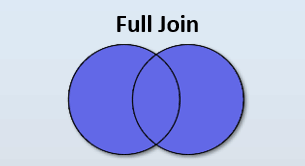
One question we need to consider is, What is the difference between a full join and a cross join?
Well, a full outer join is different from a cross join because a cross join makes a Cartesian product from all the records present in the tables.
For example, in a cross join with the same data as the preceding full join, we would get the following result:
SELECT
    c.id        AS category_id,
    c.name      AS category_name,
    g.id        AS good_id,
    g.name      AS good_name
FROM categories AS c
CROSS JOIN goods AS g;


 category_id | category_name | good_id |    good_name
-------------+---------------+---------+-----------------
           1 | Electronics   |       1 | Smartphone
           1 | Electronics   |       2 | Gaming Laptop
           1 | Electronics   |       3 | Business Laptop
           1 | Electronics   |       4 | Desktop PC
           1 | Electronics   |       5 | Refrigerator
           1 | Electronics   |       6 | Blender
           1 | Electronics   |       7 | Microwave
           2 | Computers     |       1 | Smartphone
           2 | Computers     |       2 | Gaming Laptop
           2 | Computers     |       3 | Business Laptop
           2 | Computers     |       4 | Desktop PC
           2 | Computers     |       5 | Refrigerator
           2 | Computers     |       6 | Blender
           2 | Computers     |       7 | Microwave
           3 | Laptops       |       1 | Smartphone
           3 | Laptops       |       2 | Gaming Laptop
           3 | Laptops       |       3 | Business Laptop
           3 | Laptops       |       4 | Desktop PC
           3 | Laptops       |       5 | Refrigerator
           3 | Laptops       |       6 | Blender
           3 | Laptops       |       7 | Microwave
           4 | Home          |       1 | Smartphone
           4 | Home          |       2 | Gaming Laptop
           4 | Home          |       3 | Business Laptop
           4 | Home          |       4 | Desktop PC
           4 | Home          |       5 | Refrigerator
           4 | Home          |       6 | Blender
           4 | Home          |       7 | Microwave
           5 | Kitchen       |       1 | Smartphone
           5 | Kitchen       |       2 | Gaming Laptop
           5 | Kitchen       |       3 | Business Laptop
           5 | Kitchen       |       4 | Desktop PC
           5 | Kitchen       |       5 | Refrigerator
           5 | Kitchen       |       6 | Blender
           5 | Kitchen       |       7 | Microwave
(35 rows)
A CROSS JOIN produces the Cartesian product of two tables (every combination of rows), whereas FULL OUTER JOIN returns only matching rows plus unmatched rows padded with NULL.